


Lilitech Head Unit: the home automation controller that simplifies system integration

In the context of smart homes and building automation, centralization and interoperability are now essential requirements.
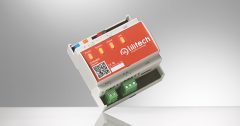
To meet these needs, Lilitech offers its Head Unit LT‑HU0001, a home automation controller designed to provide maximum control over integrated systems in residential, commercial, and industrial settings.
A powerful, compact, and versatile control unit
The Lilitech Head Unit is the brain of the Spark ecosystem, managing KNX, ModBUS, IoT, USB, and LAN devices in a unified way.
Housed in a sturdy 5-module DIN enclosure (90 × 52 × 58 mm), it mounts on a DIN rail in compliance with EN 60715 and features IP20 protection for dry indoor environments.
It operates at 24 VDC and can be connected to an uninterruptible power supply to ensure continued operation in the event of a blackout.
Multiple interfaces for total connectivity
It includes a KNX port, Lilitech BUS, RS‑485 interface for ModBUS, USB ports, and LAN.
Thanks to the cloud interface and the Lilitech app, pairing with the end user follows a guided process, enabling 24/7 remote control of installed systems.
Intuitive startup and LED-based diagnostics
On startup, the Power, System, Cloud, and Link LEDs clearly indicate the device’s status. Once connected to the network and cloud, the system can be remotely monitored and managed, with customized supervision of all subsystems.
Safety, reliability, and compliance
The Head Unit complies with IEC 62368‑1, EN 55032/55035 standards, and operates within a temperature range of −5 °C to +45 °C.
The included quick-start guide (also accessible via QR code) assists the installer during setup, minimizing errors and installation time.
Full control of all home automation systems
With the Lilitech supervisor, all key home automation functions can be managed:
-
Temperature: heating and climate control with customized scheduling based on presence and time.
-
Access control and security: intrusion detection, alarm, and flood protection automation.
-
Energy: consumption monitoring and integration with photovoltaic systems.
-
Scenes: automatic activation of sequences (lighting, shutters, alarms…) based on scenarios such as arrival, departure, or relaxation.