


Domenico Di Canosa: The Vision for the Future of Smart Building
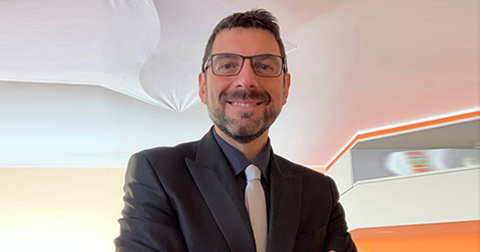

Answered by Domenico Di Canosa – President of Smart Buildings Alliance
SBA will play a leading role at Smart Building Expo by managing one of the Innovation Squares. What are the main topics you want to bring to the attention of technicians and designers visiting this important event?
Certainly, this year as well we will try to present in a “light” way the themes related to the digitalization of the Italian real estate stock, starting from the home of the average citizen, to explain the benefits that well-designed home automation can bring.
We will also dedicate time to explaining to professionals that the voluntary certification we have developed, called Ready 2 Services, has no royalty costs and only requires the simple fee of the certification body. The technician in charge checks numerous aspects, all very important when installing digital devices in private homes, commercial, and industrial buildings, covering infrastructure, privacy, and cybersecurity. In essence, R2S is an affordable, pragmatic certification that is ready for everyone.
We will present our edge automation project, which includes a “standard” device based on already existing technologies and designed to complement the current offering of automation system manufacturers. Adopting an edge solution can eliminate data silos and enable an application market that will quickly deliver services and advantages to everyone, as well as an economic boom comparable to what was generated by smartphone apps. In some cases, the edge computer can also optimize costs and installation spaces, enabling new architectures for home & building automation.
In addition, we have much to communicate about our training courses for technicians of all levels: from designers to installers. We could even consider an “Italian automation license,” inspired by the experience of the European Computer Driving License, to qualify users more quickly…
What is the role of an association like SBA within the evolving framework of the so-called “twin transition” of the building sector?
We definitely feel entrusted with the role of a Third Sector organization for the protection of citizens’ rights and the dissemination of culture. At the same time, we do not forget our technological vocation: bringing together Italy’s long-standing expertise in technological innovation with the country’s humanistic tradition. If Adriano Olivetti was a great visionary who sought to combine technology and people, giving birth to computational science, then we must be the first country to propose a technological revolution that places the citizen at the center. SBA wants to embrace this challenge and proudly carry the Italian banner of the digital and energy renaissance around the world.
SBA states that it operates in the market for the benefit of citizens, distinguishing itself from trade and employer associations. Why do you think this approach is important in the current context, and why should stakeholders in the supply chain join your project?
Well, it’s quite simple: I go back to the parallel I drew earlier about previous digital revolutions. With the advent of the Personal Computer and then of Smartphones, mature users had to face a generational gap, finding themselves at a disadvantage compared to digital natives. Not only that: Italy has always had an extremely conservative attitude toward change, with no exceptions in those cases, where we reacted with decades of delay compared to countries where young people enter the labor market earlier.
With SBA, we want to be that missing link between technology, technicians, and users in past revolutions. We hope that Italy can once again make its authoritative voice heard in electronics production, software development, data governance, and become a vibrant market for these technologies. But this requires patience, education, and a market perspective that acknowledges consumer difficulties and protects them.